Is It Anxiety or Medication Side Effects? Understanding Akathisia in Someone you Care About
Introduction:
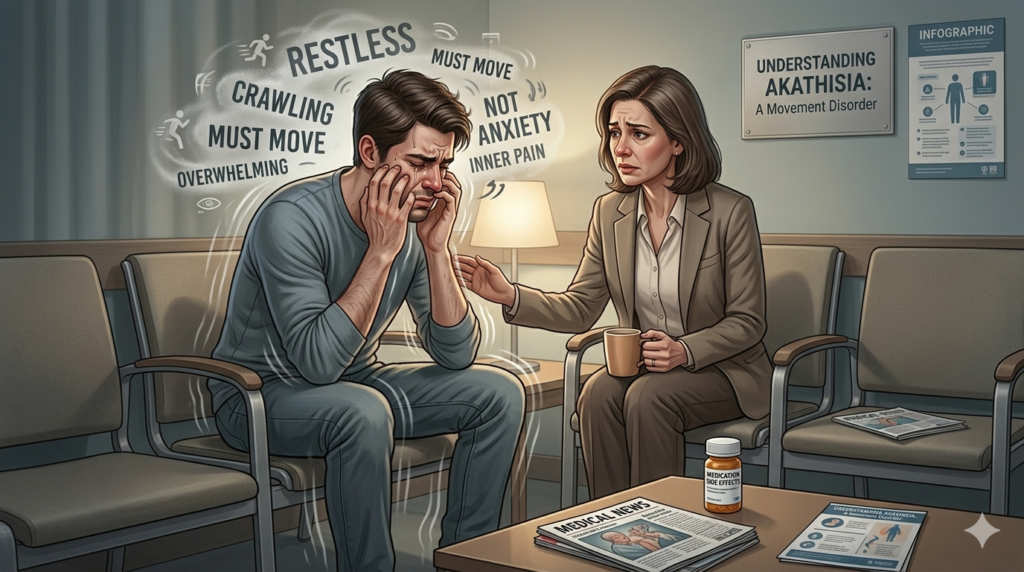
If someone you care about suddenly can’t sit still. They’re pacing the room, shifting weight constantly, rubbing their hands, unable to relax for even a minute. You might think they’re stressed or anxious… but what if it’s something else entirely?
Here’s the shocking part: up to 24% of people taking antipsychotic medications may experience a condition called akathisia, a neurological side effect that feels like unbearable inner restlessness.
It’s often mistaken for anxiety, agitation, or even “bad behavior,” but in reality, the person is fighting a medication-driven urge to move that they cannot control.
In this guide, you’ll learn:
- What akathisia really is (and why it’s often misdiagnosed)
- How to tell it apart from anxiety
- What it looks like in real life
- How to support someone experiencing it
- What caregivers should do immediately
- Why medical attention is urgent
Let’s break it down simply, clearly, and without stigma.
What is Akathisia?
Akathisia is a movement disorder that causes extreme inner restlessness. The person feels like they have to move, even when they don’t want to.
It is not psychological, it’s neurological.
People experiencing akathisia may:
- Pace constantly
- Rock back and forth
- Tap feet or fingers repeatedly
- Shift positions every few seconds
- Feel mentally “trapped” in their body
They often describe it as unbearable internal discomfort, like being “stuck in their own skin.”
Why It Happens: Medication Connection
Akathisia is most commonly linked to:
- Antipsychotic medications
- Some antidepressants (especially SSRIs)
- Certain anti-nausea or dopamine-altering drugs
These medications affect brain chemicals like dopamine, which regulate movement and emotional balance. When disrupted, the nervous system can become overactive.
This is not rare or imaginary, it is a documented side effect that needs clinical attention.
Akathisia vs Anxiety:
This is where things often get misunderstood.
Akathisia
- Physical urge to move constantly
- Cannot sit still even when trying
- Movement reduces discomfort temporarily
- Caused by medication
- Feels like “inner torture” or agitation in the body
Anxiety
- Worry-based restlessness
- Mind is racing with thoughts
- Physical restlessness may or may not occur
- Often triggered by stress or fear
- Can improve with relaxation techniques
Simple takeaway:
Akathisia is driven by the body and brain chemistry. Anxiety is driven by thoughts and emotions.
Symptoms You Should Never Ignore
Watch for:
- Continuous pacing or walking in circles
- Rocking while sitting or standing
- Inability to remain seated for even short periods
- Facial tension or distress
- Verbal expression like “I can’t stay still”
- Irritability or panic without clear cause
If these symptoms appear after starting or changing medication, akathisia should be suspected immediately.
- What It Looks Like in Daily Life
Akathisia doesn’t always look “medical.” It can be misunderstood easily.
A person might:
- Stand up repeatedly during conversations
- Walk in and out of rooms without purpose
- Appear extremely anxious or agitated
- Look like they’re “hyper” or “restless”
- Struggle to explain what they’re feeling
But internally, they’re not choosing this. They’re reacting to a neurological overload.
How to Support Someone During an Episode
Your response matters more than you think.
Helpful responses:
- “I can see you’re really uncomfortable right now.”
- “Let’s figure this out together.”
- “We should contact your doctor about this.”
Practical support:
- Offer water
- Sit with them calmly
- Reduce noise or stimulation
- Allow gentle movement (walking can help temporarily)
- Stay present without judgment
Most importantly: take it seriously immediately.
- What Not to Do (Common Mistakes)
Avoid these reactions:
- “Just sit still”
- “Calm down, it’s in your head”
- Ignoring it as normal anxiety
- Blaming the person for behavior
- Delaying medical contact
These responses can increase distress and worsen the situation.
Remember: they cannot simply relax by willpower.
Caregiver Stress and Emotional Impact
Watching someone experience akathisia can be unsettling. It may feel like:
- Confusion (“Why can’t they sit still?”)
- Fear (“Is something seriously wrong?”)
- Helplessness
To cope:
- Learn the condition clearly (knowledge reduces panic)
- Create a simple action plan for episodes
- Share responsibility with healthcare providers
- Remind yourself: this is medication-driven, not intentional behavior
You’re not expected to handle it alone.
Cultural Misunderstandings and Stigma
In many communities, including South Asian cultures, symptoms like akathisia are often misread as:
- Anxiety
- “Overthinking”
- Behavioral issues
- Lack of discipline
This leads to harmful advice like:
- “Just relax”
- “Pray more”
- “Control yourself”
But akathisia is not solved through willpower or lifestyle changes—it requires medical intervention and medication review.
Spreading awareness is key to reducing stigma.
When to Seek Medical Help Immediately
Contact a doctor urgently if:
- Symptoms begin after starting a new psychiatric medication
- Restlessness becomes severe or unbearable
- The person expresses distress like “I can’t live like this”
- Sleep becomes impossible due to agitation
- Behavior changes suddenly after dosage adjustment
Doctors may:
- Adjust medication
- Switch prescriptions
- Add supportive treatment
- Reduce dosage safely
Early action makes a huge difference.
Conclusion:
Akathisia is one of the most misunderstood medication side effects. It can easily be mistaken for anxiety, but it is fundamentally different and much more physically intense.
The most powerful thing you can do as a caregiver or loved one is simple:
recognize it early, respond calmly, and involve medical help quickly.
When people understand what’s happening, empathy replaces confusion and that alone can make the experience less frightening for everyone involved.