Facing the Doppelgänger: Understanding Capgras Syndrome and Caregiver Survival Guide
Introduction:
Imagine walking into the room, smiling at someone you love and they suddenly freeze, step back, and say:
“You’re not my daughter. Where is she?”
Not because they forgot you… but because they believe you’ve been replaced.
This unsettling experience is a real condition called Capgras syndrome a rare but serious disorder linked to dementia and Alzheimer’s disease, affecting around 16% of patients in some studies.
In this blog, you’ll learn:
- What Capgras syndrome actually is (and why it happens)
- How to respond without escalating the situation
- Practical caregiver scripts that actually work
- How to protect your own mental health while caring for someone
If you’re dealing with this, trust this guide is here to make things a little less overwhelming.
What Is Capgras Syndrome?
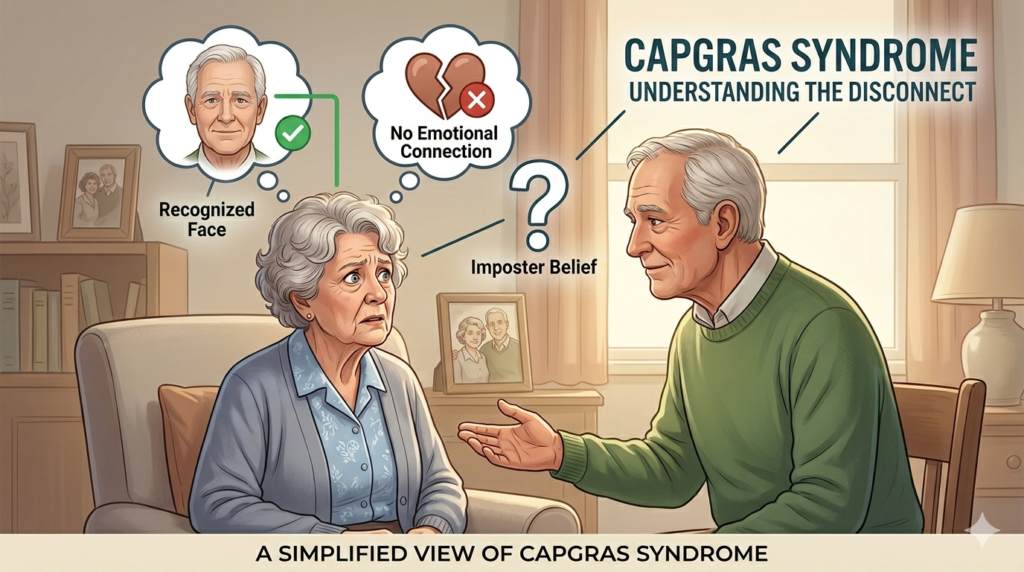
Capgras syndrome is a neuropsychiatric condition where a person believes someone close to them has been replaced by an identical impostor.
This isn’t simple forgetfulness. The brain recognizes the face but doesn’t feel the emotional connection, so it creates a false explanation.
Key Facts:
- Common in dementia-related conditions
- Can occur after brain injury
- Often underdiagnosed
- Can lead to fear, paranoia, or aggression
Why Capgras Syndrome Happens: A Neurological Explanation
One of the most important things to understand about Capgras syndrome is that it is not random or intentional behavior, it is the result of a neurological disruption.
Under normal conditions, the brain processes familiar faces through two connected systems:
- Facial recognition (identifying who the person is)
- Emotional recognition (generating the feeling of familiarity and trust)
When you see someone close to you, these systems work together seamlessly. You not only recognize their face, but also experience an automatic emotional response that confirms their identity.
In individuals with Capgras syndrome, this connection is impaired. While the brain may still correctly identify a face, it fails to trigger the corresponding emotional response. This mismatch creates a sense that something is “off.”
To resolve this inconsistency, the brain constructs an explanation: the familiar person must have been replaced by someone who looks identical.
As a result, the belief in an impostor is not a simple misunderstanding, it is a deeply convincing perception shaped by altered brain function. Because the experience feels entirely real to the individual, attempts to challenge it with logic or factual correction are typically ineffective and may increase distress.
Signs & Symptoms to Watch
Capgras doesn’t show up quietly, it hits relationships directly.
Common Signs:
- Accusing loved ones of being impostors
- Refusing care from “replaced” family members
- Anxiety or fear around familiar people
- Aggressive or defensive behavior
- Paranoia (“They’re trying to harm me”)
It can come and go, or worsen over time depending on the underlying condition.
How to Respond (Without Making It Worse)
Okay this part? Super important. Your reaction can either calm things down, or escalate fast.
What NOT to do:
- Argue (“No, I’m your daughter!”)
- Try to prove reality with logic
- Get frustrated or take it personally
What ACTUALLY works:
- Validate the feeling
“I understand this feels scary.”
- Reassure gently
“I’m here with you. You’re safe.”
- Redirect attention
“Let’s have some tea together.”
- Keep your tone calm & steady
Energy matters more than words here. - Safety, Boundaries & Crisis Planning
Sometimes fear turns into aggression, and that’s when things get serious.
Set Boundaries:
- Keep a safe distance if needed
- Don’t corner or overwhelm the patient
- Stay near exits during tense moments
Have a Safety Plan:
- Emergency contact ready
- Calming routine (music, prayer, familiar shows)
- Medical alert system if needed
Crisis Warning Signs:
- Increasing paranoia
- Attempting to run away
- Physical aggression
If these show up get help immediately. No hesitation.
Caregiver Mental Health: Don’t Ignore Yourself
Let’s be real for a sec, this is emotionally draining.
Being told you’re a “stranger” by someone you love? That hits deep.
What you might feel:
- Hurt
- Exhaustion
- Frustration
- Loneliness
And yeah… that’s valid.
What you NEED to do:
- Take breaks (non-negotiable)
- Talk to someone (therapy/support groups)
- Stay connected with your people
- Do small things that recharge you
You can’t pour from an empty cup. Period.
Cultural Stigma & Misunderstandings
In many cultures, Capgras symptoms get misinterpreted.
People might say:
- “It’s just memory loss”
- “They’ve gone crazy”
- Or even link it to supernatural beliefs
But the truth is:
This is a medical condition, not a moral or spiritual issue.
Education reduces shame, and helps families respond better.
Quick Response Flowchart
Situation: Patient says: “You’re not my son/daughter.”
- Don’t argue
- Validate emotion
- Reassure calmly
- Redirect to comfort activity
- Stay consistent
Simple steps. Big impact.
9.Conclusion:
“You’re Dealing with More Than Memory Loss”
Capgras syndrome can feel surreal, painful, and honestly… exhausting. But understanding what’s happening changes everything.
Instead of reacting emotionally, you can respond strategically and compassionately.
Key Takeaways:
- It’s neurological, not intentional
- Arguing makes it worse
- Calm reassurance works best
- Your mental health matters just as much