Pulling Hair, Picking Skin: Supporting Closed Ones with BFRBs
Introduction
Have you ever noticed someone repeatedly pulling out their hair or picking at their skin, even when they seem distressed about it?
These behaviors are often misunderstood as habits or nervous actions. In reality, they are part of a group of mental health conditions known as Body-Focused Repetitive Behaviors (BFRBs). The two most common forms include Trichotillomania (hair pulling disorder) and Excoriation (skin-picking disorder).
Research suggests that trichotillomania alone affects up to 3% of individuals, often beginning during adolescence. Despite being relatively common, many individuals suffer in silence due to shame, misunderstanding, or lack of awareness.
This blog explains what BFRBs are, why they occur, and how families and caregivers can provide effective, non-judgmental support.
Understanding Body-Focused Repetitive Behaviors (BFRBs)
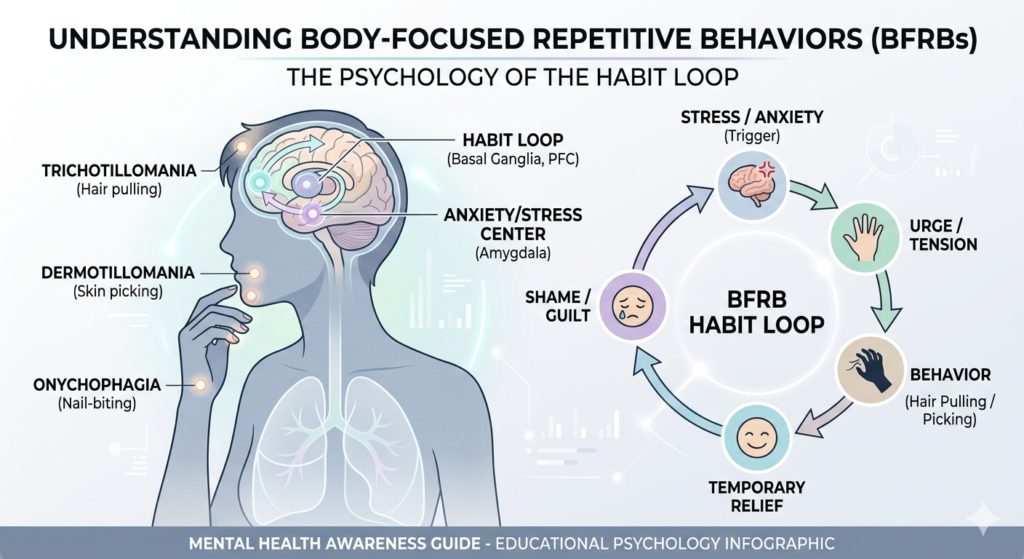
Body-Focused Repetitive Behaviors are repetitive self-grooming behaviors that result in physical damage. These behaviors are not intentional self-harm but are often driven by urges that feel difficult to resist.
BFRBs are commonly associated with:
- Anxiety disorders
- Obsessive-compulsive spectrum conditions
- Emotional regulation difficulties
- Stress-related coping mechanisms
Individuals often experience temporary relief during the behavior, followed by guilt or distress afterward, creating a repetitive cycle.
What is Trichotillomania?
Trichotillomania is a mental health condition characterized by recurrent pulling out of one’s hair, most commonly from the scalp, eyebrows, or eyelashes.
Common features include:
- Noticeable hair loss or bald patches
- Repeated attempts to stop or reduce the behavior
- Increased tension before pulling and relief afterward
- Concealment of affected areas
The behavior may occur consciously or automatically, especially during periods of stress, boredom, or deep focus.
What is Excoriation Disorder?
Excoriation disorder, also known as skin-picking disorder, involves repetitive picking, scratching, or digging into the skin.
It can lead to:
- Skin lesions or wounds
- Scarring or discoloration
- Risk of infections
- Emotional distress and embarrassment
Many individuals report that the behavior begins as a way to “fix” perceived skin imperfections, which gradually becomes compulsive.
Underlying Causes and Risk Factors
BFRBs do not have a single cause. Instead, they are influenced by multiple biological and psychological factors, including:
- Genetic predisposition
- Stress and anxiety
- Sensory sensitivity or bodily focus
- Impulse control difficulties
- Habit reinforcement through temporary emotional relief
These behaviors are often maintained because they momentarily reduce tension, even though they create long-term distress.
Common Signs and Symptoms
Possible indicators include:
- Repeated hair loss patterns or thinning areas
- Skin sores, scabs, or scarring
- Spending extended time grooming or examining skin/hair
- Avoidance of social situations due to appearance concerns
- Attempts to hide affected areas using makeup, clothing, or hairstyles
Psychological and Social Impact
BFRBs can significantly affect quality of life. Individuals may experience:
- Reduced self-esteem
- Social withdrawal
- Anxiety and depressive symptoms
- Academic or occupational difficulties
- Persistent feelings of shame or guilt
The emotional burden is often greater than the physical symptoms themselves.
How to Support a Loved One
Support from family and friends plays an important role in recovery.
Effective approaches include:
- Communicating concern in a calm and non-judgmental manner
- Encouraging open conversations without pressure
- Offering emotional presence during difficult moments
- Supporting professional treatment rather than attempting to control behavior
Example of supportive communication:
“I’ve noticed you seem stressed lately, and I care about you. If you ever want to talk or need support, I’m here.”
Evidence-Based Coping Strategies
Clinical approaches often include Habit Reversal Training (HRT), which focuses on increasing awareness and replacing the behavior with alternative responses.
Common strategies include:
- Identifying triggers and high-risk situations
- Using competing responses (e.g., holding an object when urges arise)
- Reducing environmental triggers
- Keeping hands engaged with alternative activities
Helpful tools may include stress balls, fidget devices, or structured hobbies.
What Caregivers Should Avoid
Caregiver reactions can significantly influence outcomes. It is important to avoid:
- Criticism or punishment
- Public confrontation or embarrassment
- Forcing immediate behavioral change
- Minimizing the condition as “just a habit”
Such responses often increase stress and may worsen symptoms.
Stigma and Misconceptions
BFRBs are frequently misunderstood as behavioral issues or lack of self-control. In reality, they are recognized mental health conditions linked to anxiety and impulse regulation.
Misconceptions contribute to stigma, which can delay treatment and increase emotional distress. Education and awareness are key to improving outcomes.
When to Seek Professional Help
Professional support should be considered when:
- Physical damage becomes severe or recurrent
- Emotional distress increases significantly
- Daily functioning is affected
- Self-management strategies are not sufficient
Evidence-based treatments include cognitive behavioral therapy, habit reversal training, and in some cases, medication for associated anxiety or OCD symptoms.
Conclusion
Trichotillomania and excoriation disorder are often hidden conditions that carry significant emotional weight. While they may appear as repetitive physical behaviors, they are deeply connected to psychological processes involving stress, anxiety, and emotional regulation.
Support, patience, and informed understanding are essential in helping individuals manage these conditions effectively. With appropriate care and intervention, meaningful improvement is possible.